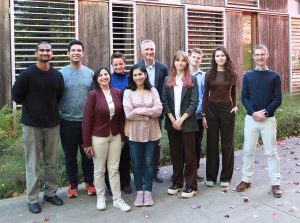
Bernhard Rinner is a professor and deputy head of the Institute of Networked and Embedded Systems at the University of Klagenfurt (Austria). He has 30 years experience in fundamental and technology-oriented research, university teaching, project management and academic leadership. His research interests include pervasive computing, sensor networks and multi-camera networks, embedded computing as well as multi-robot systems. Bernhard Rinner received a master’s and doctoral degree in computer engineering from Graz University of Technology, Austria.

Heidelies Aschbacher is secretary in the group of Bernhard Rinner at the University of Klagenfurt. She joined the Pervasive Computing Group in 2007 and is responsible for the various administrative activities of the research group.
Research staff members
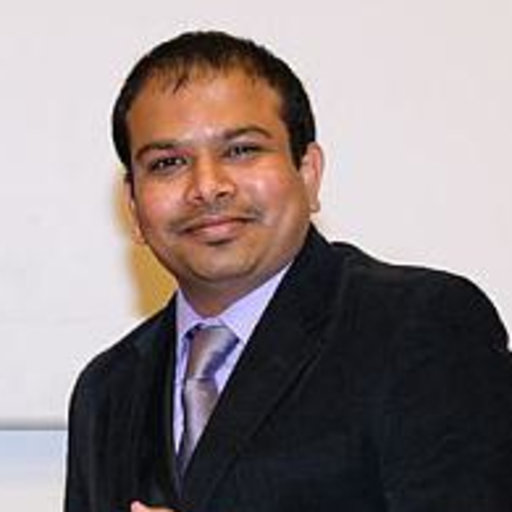
Sharath Chandra Akkaladevi is a PhD student in the Pervasive Computing group at the University of Klagenfurt. His research is on activity and scene understanding in human robot collaboration for industrial applications. He holds a master’s degree with distinction in information technology from University of Klagenfurt. Since 2012 he is working as a research scientist in the robotics and autonomous system department at Profactor GmbH in Steyr, Austria.

Sergi de las Muelas Acosta is a researcher at the Institute of Networked and Embedded Systems at the University of Klagenfurt and a member of the Karl Popper Kolleg (KPK) program. His research focuses on realistic modeling and simulation of unmanned aerial vehicles (UAVs), low-level control based on reinforcement learning, and high-speed last-moment obstacle avoidance for autonomous forest exploration. He received his Master’s degree in Automatic Control and Robotics from the Universitat Politècnica de Catalunya (UPC), Spain, and his Bachelor’s degree in Mechatronics Engineering from the Universitat de Vic (UVIC-UCC), Spain.
Markus Gutmann is a senior lecturer for “AI and Robotics” and former PhD researcher at the Institute of Networked and Embedded Systems at the University of Klagenfurt. He teaches basic and advanced subjects on swarm robotics, communication systems, digital circuits and programming. He spent 15 years in industrial software engineering as software developer, product manager and CTO. His interests lie in multi-drone applications, robot programming and human teamworking.

Dnyandeep Mandaokar is a research and teaching staff member at the Institute of Networked and Embedded Systems at the University of Klagenfurt. His research focuses on self-awareness and smart sensor networks to support developing autonomous systems. He received his Master’s degree in “Automotive Mechatronics and Management” from the University of Applied Sciences in Wels, Upper Austria and a second Master’s degree in “Sustainable Resource Management” from TU Munich, Germany.

Aamna Zahid Piracha is a research and teaching staff member at the Institute of Networked and Embedded Systems at the University of Klagenfurt. Aamna’s research interests lies in disaster management, reliable sensing and mission planning of multi-agent UAVs. She holds a master’s degree in electrical and computer engineering from Ajou University in South Korea and a bachelor of electrical engineering degree from National University of Sciences and Technology, Pakistan.

Mohammad Rahmani is a researcher in the doctoral school on decision making in a digital environment (DECIDE) hosted by the Digital Age Research Center at the University of Klagenfurt. His research is on self-awareness in multi-robot systems. He received a master’s degree in computer science from Amirkabir University of Technology in Tehran and a bachelor’s degree in applied mathematics from PNU Shiraz University, and he participated in several research projects on rehabilitation robotics in Spain.

Merna Tohfa is a research and teaching staff member at the Institute of Networked and Embedded Systems at the University of Klagenfurt. Her research focuses on trajectory planning techniques of multi-agent UAVs. She hold’s a master’s degree in information and communications engineering from Klagenfurt University, Austria and a bachelor of science degree in engineering and materials science from the German University in Cairo, Egypt.
Student staff members

Iryna Dolenko is a student assistent working on bio-inspired navigation in micro-drones. She is a bachelor student in Robotics and Artificial Intelligence at the University of Klagenfurt.

Kristina Khachatrian is a student assistent evaluating hardware platforms for the Design of Digital Circuits lab. She is a bachelor student in Robotics and Artificial Intelligence at the University of Klagenfurt.

Gleb Matyushev is a student assistent evaluating hardware platforms for the Design of Digital Circuits lab. He is a bachelor student in Robotics and Artificial Intelligence at the University of Klagenfurt.